

Partners:
SMM Composites x ELIXANCE x COMPOSITIC
Duration:
24 months [2023-2025]
What if designing large tools for the marine industry and manufacturing became simpler, cleaner, and resolutely future-focused?
This is the ambition behind the REACT-3D collaborative project (REcyclable Additive Composite Tool 3D), led by SMM Composites alongside Elixance and the ComposiTIC technical platform. By combining our field expertise, we are betting on a more agile form of additive manufacturing that streamlines production processes, reduces manual manufacturing steps, and fully embraces the circular economy.
Evolving processes: rethinking large tooling design
To fully appreciate the impact of large-format 3D printing, it helps to look at how large composite tools are traditionally crafted.
Up until now, the process has relied on a multi-stage workflow: a master model is first produced (often shaped from assembled polystyrene blocks), which is then machined, laminated, and prepared to serve as a base for laying up and curing the final mold.
While these conventional methods have proven their worth in guaranteeing maximum reliability, they involve lengthy operational sequences and significant material flows at each intermediate stage. It is precisely to complement these core skills and optimize these cycles that the REACT-3D project introduces a new alternative.
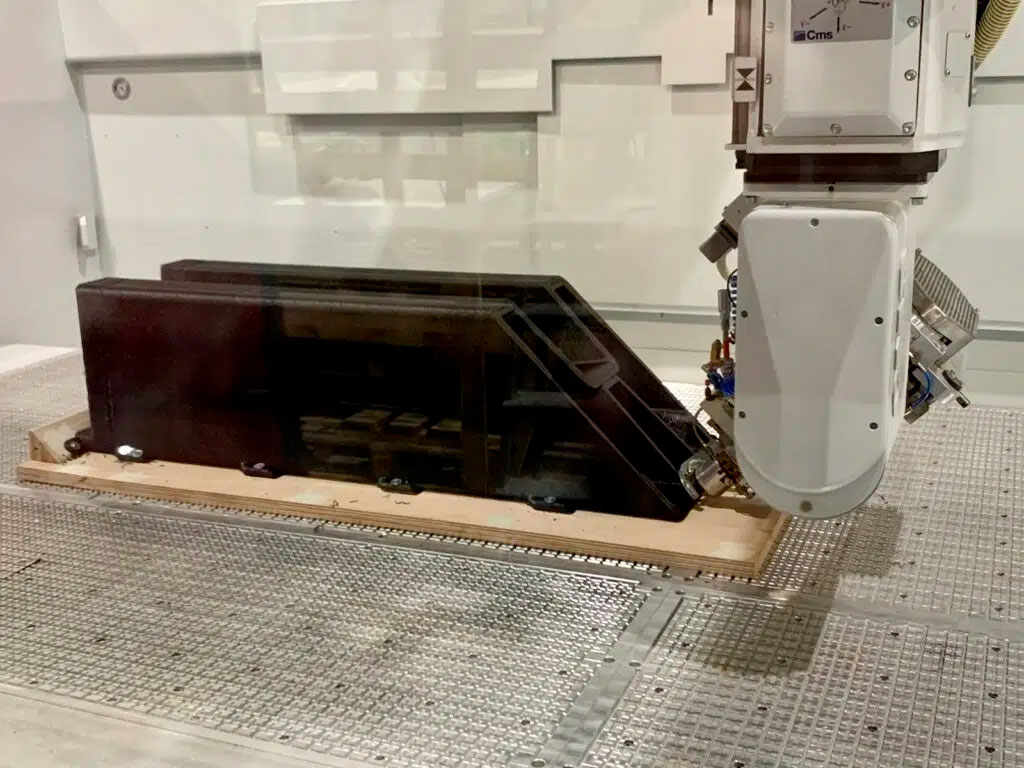
The REACT-3D solution: printing the mold directly, without an intermediate match mold
Large-format additive manufacturing completely reverses the traditional logic: instead of removing material around a model, only the exact amount of material required is deposited, directly forming the final shape of the tool.
LSAM (Large Scale Additive Manufacturing) technology involves extruding a thermoplastic polymer (supplied as pellets) through a print head mounted on a robot. The material is deposited bead by bead to build up the structure.
To guarantee precision and an optimal surface finish, the machines also feature an integrated milling spindle: once printing is complete, the functional surface is finished to provide a perfectly smooth texture, ready for composite layup.
A synergy of expertise dedicated to performance
This R&D project is built on close complementarity between its partners:
- SMM Composites: industrial project management, tool design, implementation of LSAM printing, and high-precision finishing machining.
- Elixance: custom formulation of technical thermoplastic compounds tailored to the demands of 3D printing and autoclaving cycles.
- ComposiTIC: scientific support for advanced material characterization, printing parameter optimization, and Life Cycle Assessments (LCAs).
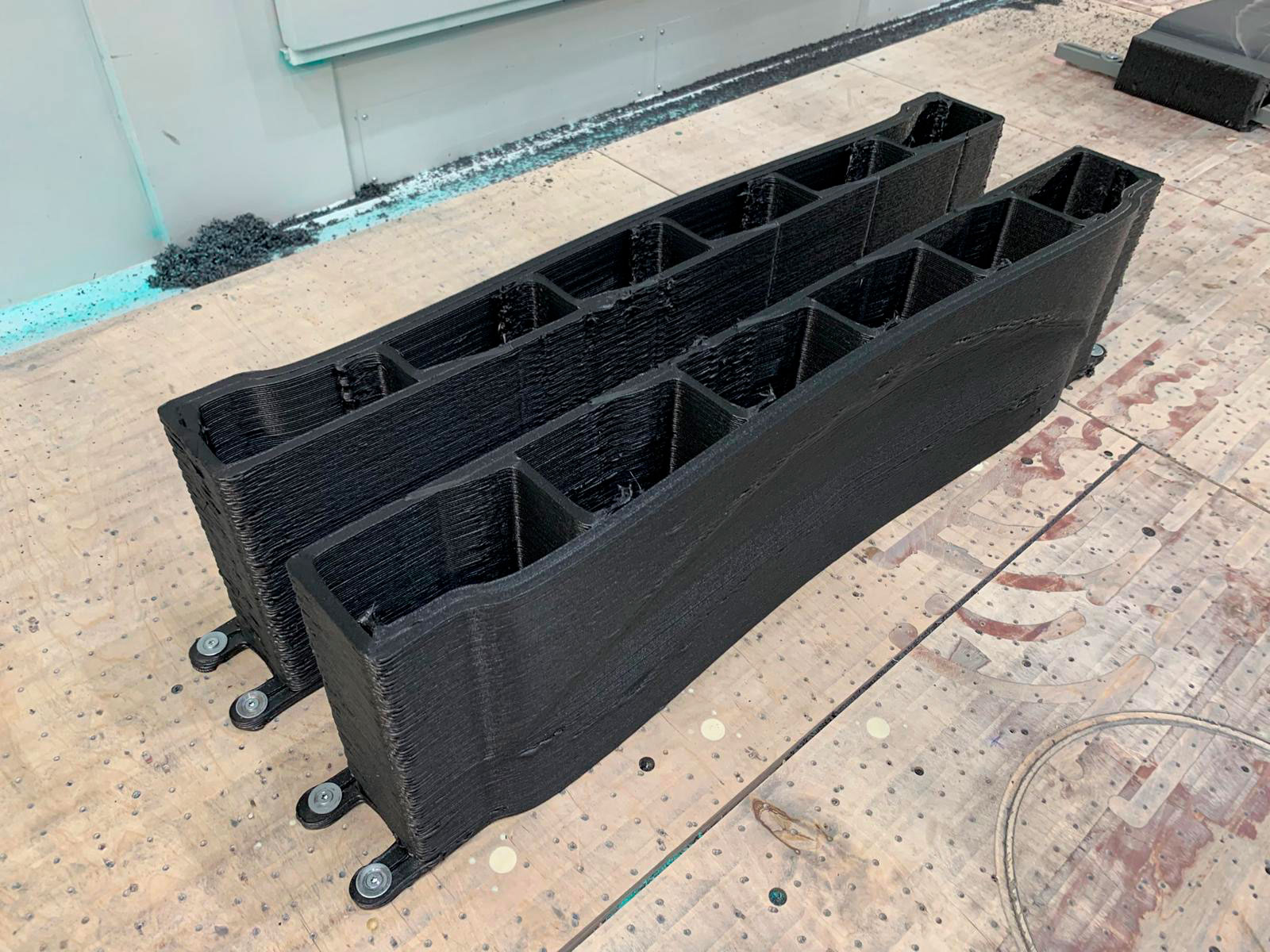
Thermal management and material selection
A key technical highlight: the polymers used are fiber-reinforced (approximately 20%).
Glass or carbon fibers provide rigidity, structural strength, and improved thermal expansion performance for the printed part.
The result: the mold undergoes less thermal distortion and conducts heat better, ensuring dimensional stability during the curing of composite parts.
Moving toward an integrated circular economy
Beyond shortening production lead times and eliminating the master model, REACT-3D integrates a virtuous recycling loop. Machining waste and end-of-life tools can be recovered, shredded, and re-extruded for reinjection into new production cycles, paving the way for the sustainable use of filled thermoplastic materials.
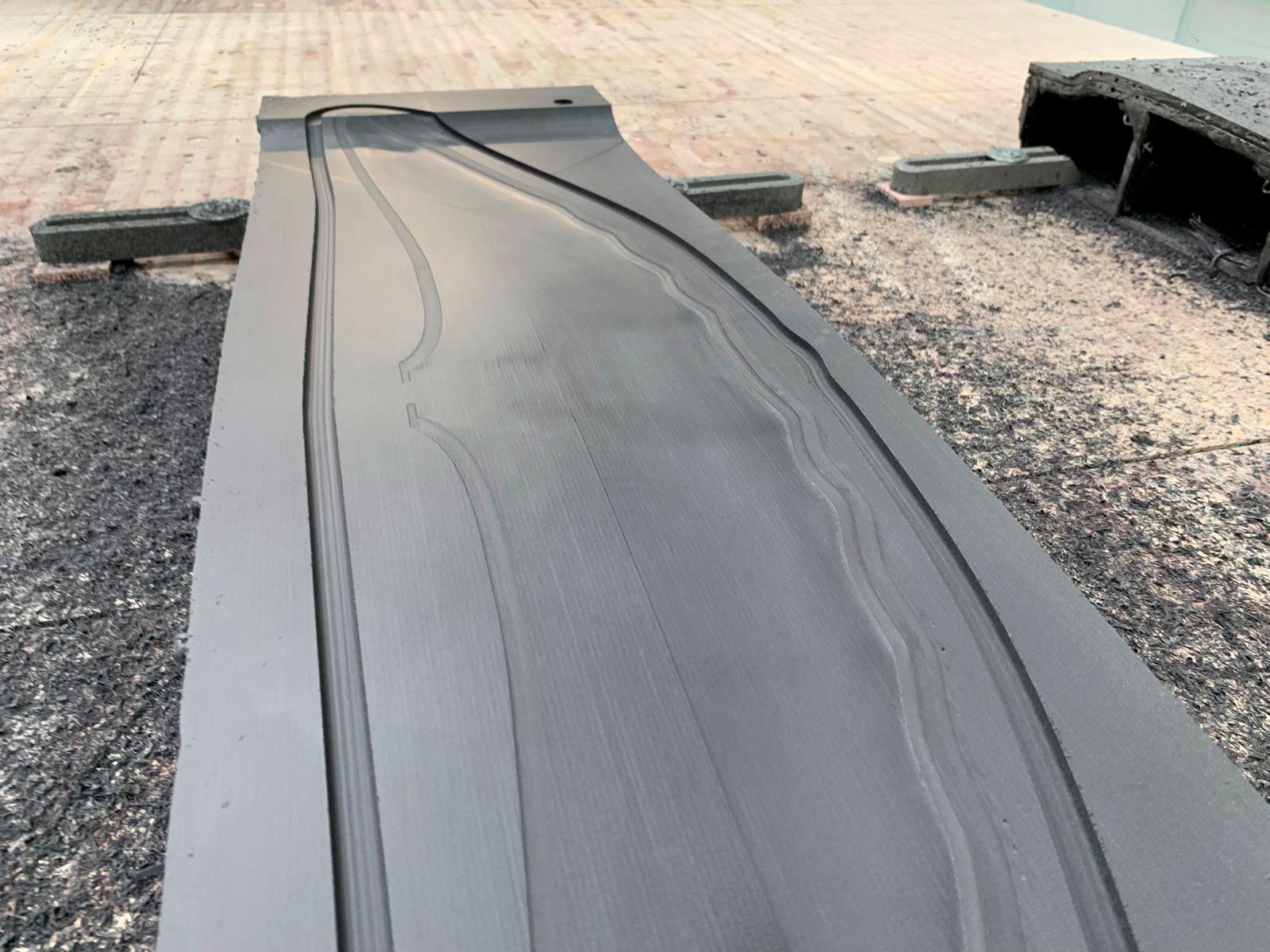
At a glance: what changes
| Key Challenges | Traditional Process | LSAM Process (REACT-3D) |
| Steps & Lead Times | Master model + mold (several months) | Direct printing + finishing machining (shortened lead times) |
| Material Flow Management | Polystyrene and thermoset waste | Net-shape material deposition and recyclable thermoplastic chips |
| Workshop Safety | Handling chemical products | Elimination of thermosetting resin processing steps |
The REACT-3D project confirms that large-format 3D printing via filled polymer extrusion is no longer just a forward-looking promise, but an industrial reality ready to sustainably transform tool manufacturing in the maritime sector and far beyond.
Have a composite mold or tooling project in mind?
Let’s discuss your needs: our teams are here to help you select the most suitable process for your application.